Operating a 25-ton excavator addresses heavy structural earthmoving that compact machinery cannot complete. Delivering roughly 160 to 190 net horsepower, a standard 50,000-pound machine achieves a maximum dig depth…
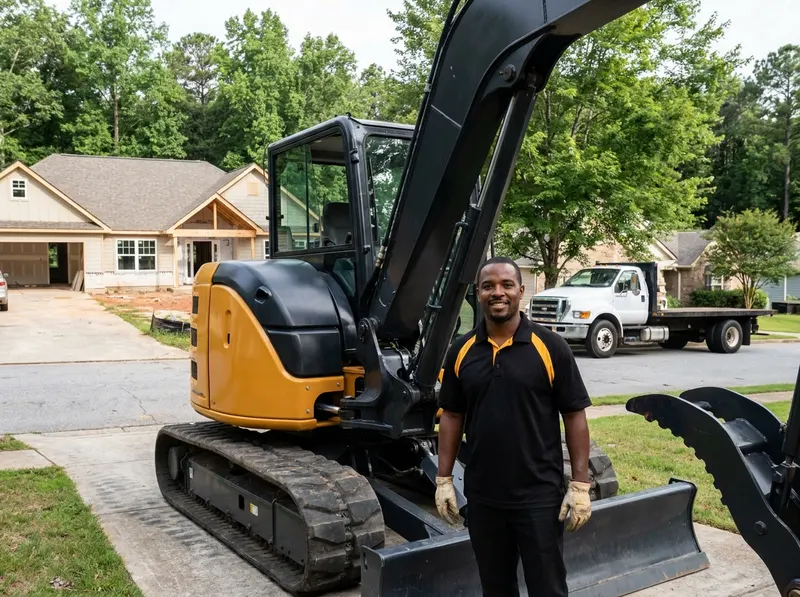
Operating a 25-ton excavator addresses heavy structural earthmoving that compact machinery cannot complete. Delivering roughly 160 to 190 net horsepower, a standard 50,000-pound machine achieves a maximum dig depth exceeding 22 feet and a bucket breakout force often surpassing 35,000 pounds. When parcel work involves clearing mature pines along Rock Chapel or excavating granite-dense soils near the Arabia Mountain Heritage Area, smaller 8-ton mini excavators lack the cycle speed and hydraulic torque needed to pry out bedrock or manage dense clay without operator fatigue. For smaller trenching projects, smaller excavators preserve tight yard access; however, moving 300 cubic yards of subsoil or loading tandem dump trucks requires a true 25-ton frame. The primary operational trade-off is site access: a 25-ton unit measures over 10 feet wide and requires lowboy commercial semi-trailer delivery, demanding wide street approaches and robust subgrades rather than standard asphalt neighborhood driveways.
Site preservation remains central when staging heavy tracked iron in residential or suburban infill zones. Moving 25 tons across concrete aprons or asphalt entrances without stabilization will crush curb heads and crack unreinforced four-inch concrete slabs. Standard delivery protocol mandates routing along designated thoroughfares such as Klondike Road, Browns Mill Road, or Evans Mill Road before entering residential sectors like Miller Woods, Fairington, or Salem Crossing. Lowboy transports stage strictly on wide public shoulders or graded commercial aprons to unload. When crossing finished driveways to reach work pads near Browns Mill Park or the Parks at Stonecrest, track paths require heavy-duty three-quarter-inch timber crane mats or composite ground protection panels to distribute track ground pressure from approximately 5.5 to 7.0 PSI down to sustainable levels.
Preparing a project zone requires four specific logistical stages. First, contact Georgia 811 at least three full business days prior to dispatch so underground gas, water, and electrical mains are marked across the entire right-of-way. Second, confirm that overhead tree branches provide at least 14 feet of vertical clearance for the transport tractor-trailer, particularly on older roads in the Arabia Mountain corridor. Third, designate a flat, firm turnaround pad clear of drainage swales and private septic fields. Fourth, confirm the operational schedule with our dispatch team at (229) 582-6646 to coordinate machine delivery, hydraulic attachment fittings, and on-site walk-around inspections.
Every job gets a firm, written price after a free on-site visit.
Tell us about your 25-ton excavator rentals job in Stonecrest and we'll send a clear, written quote, usually the same day.
 Golden Coast Dumpster Rental