Operating heavy earthmoving machinery in residential DeKalb County requires matching machine weight to soil constraints and property layout. In established neighborhoods such as Fairington and Miller Woods, narrow lot…
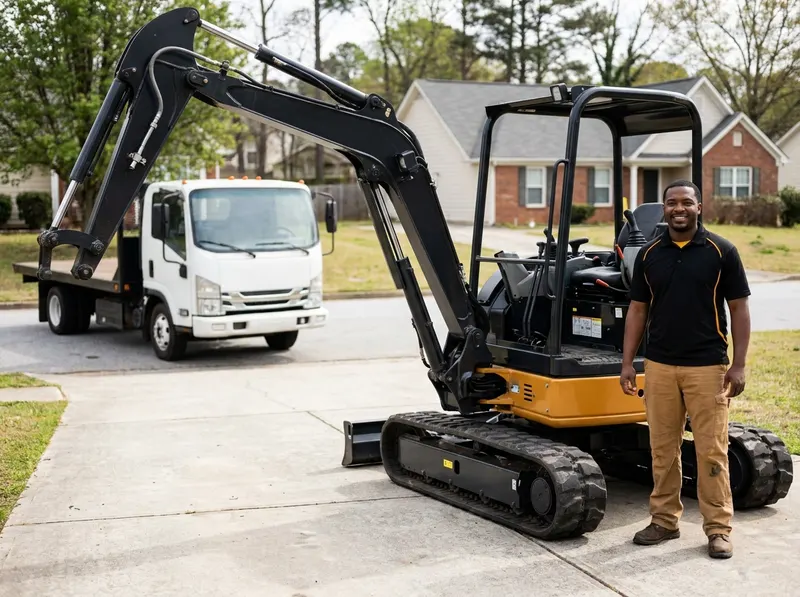
Operating heavy earthmoving machinery in residential DeKalb County requires matching machine weight to soil constraints and property layout. In established neighborhoods such as Fairington and Miller Woods, narrow lot lines and aging asphalt driveways cannot tolerate standard steel-track excavators. A 3-ton to 4-ton mini-excavator with continuous rubber tracks distributes equipment weight to approximately 4.2 pounds per square inch, allowing operators to cross turf and concrete pads without crushing subsurface utilities. Before taking delivery near granite-heavy terrain like Rock Chapel or the Arabia Mountain Heritage Area, operators must call Georgia 811 to mark underground power and water lines, preventing costly utility strikes. A mini-excavator rental provides the power to dig footings, grade driveways, or clear roots, but it is not a full-service operated crane; the renter supplies the operator and manages on-site handling.
Selecting the correct tonnage depends on clear operational limits. A compact 6,000-pound machine fits through 60-inch residential fence gates and digs down to 8.5 feet, making it ideal for backyard pool trenching or small drainage lines in the Parks at Stonecrest. Conversely, clearing mature pine root balls or grading heavily sloped terrain in Klondike or the Browns Mill Park community requires an 8-ton model delivering 14,000 pounds of breakout force and a 15-foot dig depth. The trade-off between these weight classes is physical accessibility versus cycle time: smaller units preserve landscaped turf and fit into tight zero-lot-line setups near Salem Crossing, but moving 40 yards of DeKalb clay takes twice as many passes compared to a mid-frame machine.
Every machine delivery follows a structured property-protection protocol. Step one: dispatch measures street access off arterials like Klondike Road to ensure the haul trailer can maneuver safely without blocking local traffic. Step two: delivery operators place ground runners if equipment must travel across manicured sod or decorative paver aprons. Step three: the renter receives a hands-on mechanical walkthrough covering hydraulic quick-couplers, two-way blade control, and emergency auxiliary shutoffs. This structured sequence eliminates the uncertainty of blind drop-offs and shields residential driveways from structural damage.
Every job gets a firm, written price after a free on-site visit.
Tell us about your mini-excavator rentals job in Stonecrest and we'll send a clear, written quote, usually the same day.
 Golden Coast Dumpster Rental